
Q: My pony got laminitis last spring and the veterinarian said it happened because he ate too much grass. How can what he eats cause problems in the feet?
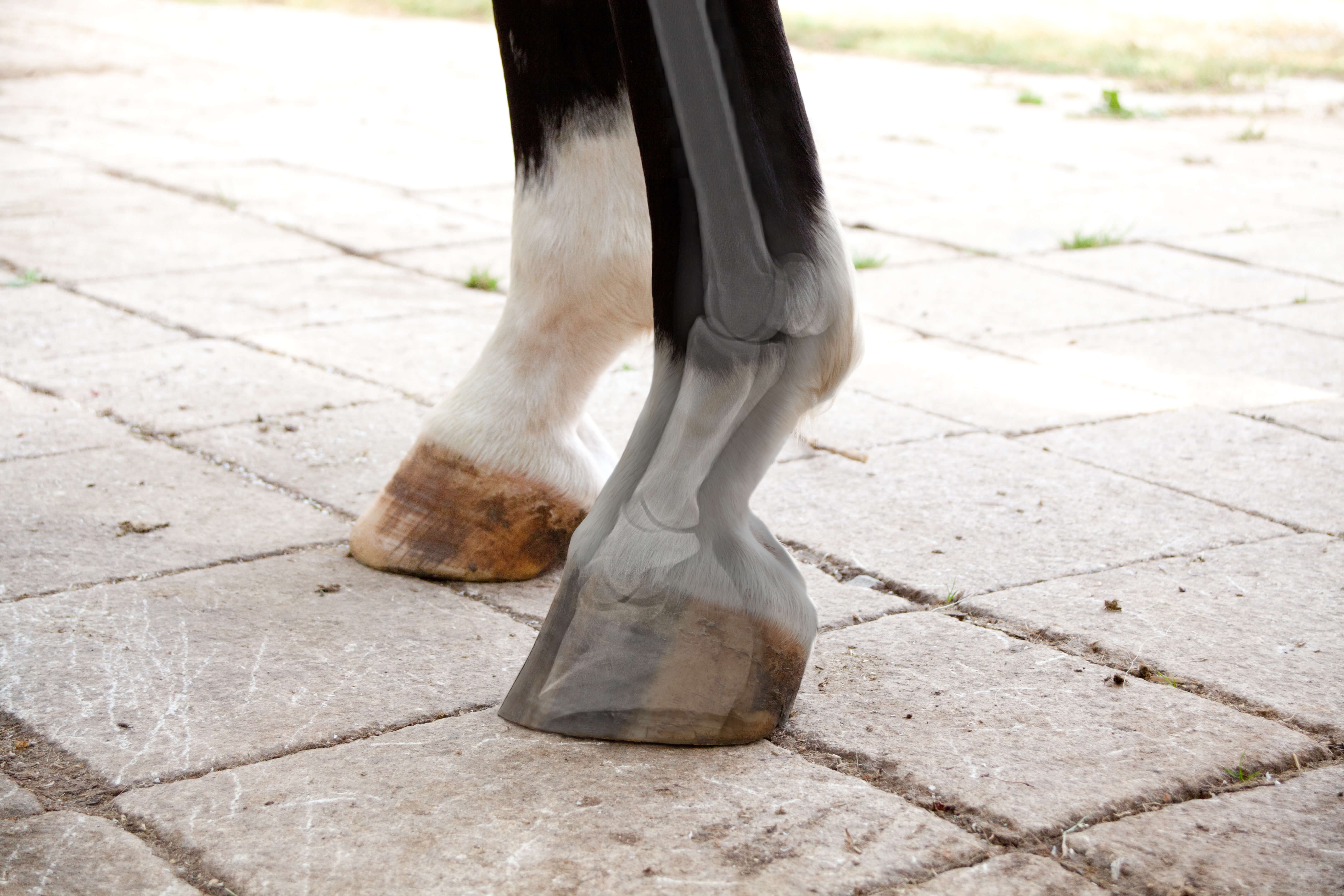
A: When a horse or pony gets laminitis, the soft inside layers of his hooves, which are attached the bones in the hoof, tear away from the hard outer parts (the parts we can see on the outside of the hoof). Normally, these two portions are linked by millions of tiny fibres called laminae that hold the two together tightly. This is important because these two layers connect the bone in the hoof to the wall of the hoof and in this way keep the bone in the right place. The soft inner layers of the hoof have blood flowing through them, but the tough outer parts, which are somewhat like your finger nails, do not. Sometimes when these layers peel away from each other, the main bone inside the hoof slips down in the hoof. If this happens, the horse or pony isn’t likely to recover enough to be ridden.
These events inside the hoof can happen for many reasons. In your pony’s case, his digestive system probably wasn’t used to the grass he was eating. In the spring, grass is very rich and this means that lots of starch and sugar enters your pony’s gut. When an excessive amount of starch and sugar are ingested it causes an overload in the digestive system with undigested sugar and starch being pushed through to the hindgut. Bacteria break down the undigested material causing acidity in the hindgut, which kills the bacteria that digests fibre. As the bacteria die they release toxins into the gut, which are then passed into the bloodstream through the gut wall. These toxins provoke a response within the horse that is thought to disrupt blood flow, which, in the feet, can cause laminitis.
Although laminitic ponies can be cured, they can easily become laminitic again. From now on, you’ll have to be extra careful not to let your pony have rich treats like spring grass because they could do him more harm than good.

