Understanding how your pony thinks and why it matters
Your pony doesn’t think like a human, and that’s what makes them so amazing! They experience the world through their senses – sound, smell, touch, and sight – and their brains are wired for safety first. Once you understand how ponies process information and react, you’ll find it easier to train, stay calm, and build real trust.
Pony brain 101
Ponies are prey animals, which means their main job in nature is to stay alive by spotting danger and reacting quickly. That’s why they can sometimes spook at a fluttering jacket or a pigeon taking off. Their brains tell them: ‘Move first, think later!’ It isn’t naughtiness (ponies simply aren’t capable of this behaviour); it’s survival instinct. When you stay calm and show them that something is safe, their brain begins to switch from reacting to thinking again.
How ponies learn
Ponies learn through repetition, timing, and reward. They don’t understand words the way people do; they understand patterns. If you’re consistent and reward the right behaviour (even just with a soft voice or scratch on the neck), they learn fast. But if your signals keep changing, your pony gets confused and frustrated. Their brain works best when things are clear and predictable.
Pony memory magic
Ponies have great memories, especially for things connected to strong emotions. That’s why they remember the jump they knocked, the scary corner in the arena, or the rider who made them feel safe.
Good memories build confidence; bad ones can make them nervous. That’s why calm, kind handling always pays off; it teaches your pony that you’re someone they can trust, no matter what.
Rider brain vs. pony brain
Riders often think in words: ‘I’ll ask for canter in the corner, then turn left.’
Ponies think in feelings: “The pressure on my side means move forward. The hands mean slow down.”
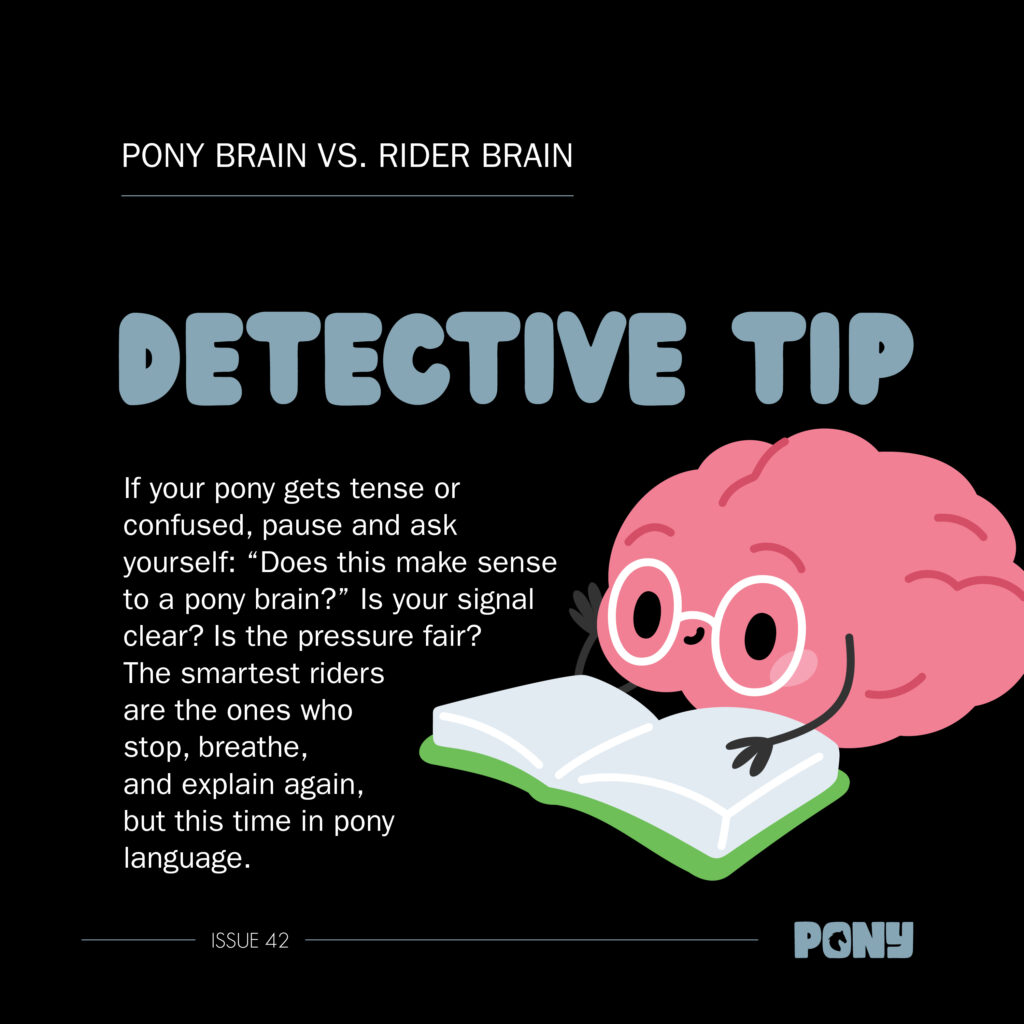
When we expect them to think like people, we can get impatient. But when we learn to think more like ponies and be quiet, clear and consistent to help them, communication gets easier for both of us.
Pressure and calm
Ponies don’t understand pressure the way we do. To them, pressure isn’t a punishment; it’s a signal. You add a little pressure (like your leg or rein), and when they respond, you release it. That release is their ‘good job!’ moment.
If pressure keeps building with no release, ponies get stressed and can switch into ‘flight mode.’ Remember: clarity and calmness make learning fun, not frightening.
Final thoughts
Your pony’s brain isn’t trying to be difficult; it’s just trying to feel safe and understood.
When you remember that ponies react before they reason, and learn through clear, consistent kindness, you become a rider they can truly trust.