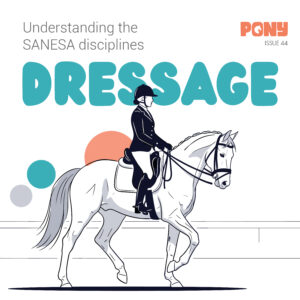
Ever watched a horse move so beautifully that it looks like they’re dancing? That’s dressage!
What IS Dressage?
The word ‘dressage’ comes from a French word that means ‘training,’ but it’s so much more than that! Imagine if you could teach your horse to move like a ballet dancer – graceful, powerful, and so in tune with you that you barely need to give any signals at all. That’s what dressage is all about.
In dressage, you and your horse or pony perform a test (think of it like a dance routine) in a special arena marked with letters around the edge. A judge watches every movement and gives you marks out of 10, just like in ice skating or gymnastics. The goal? To make your horse or pony look happy, relaxed, and beautiful as they perform different movements like circles, changes of pace, and fancy footwork!
Why is dressage special?
Dressage is often called ‘the art of horse riding’ because it teaches you and your horse to work together as one team. Every other riding discipline – from jumping to showing – starts with dressage training. It’s the foundation of everything!
The best part? Your horse should look like they’re enjoying themselves. An ancient Greek rider named Xenophon said it perfectly over 2000 years ago: when you train your horse properly, they should look “joyous and magnificent, proud and remarkable.” That’s still what we aim for today!
How does SANESA Dressage work?
SANESA offers dressage for both Primary School riders (up to Grade 7) and High School riders (Grade 8 and up). The brilliant thing about dressage is that it doesn’t matter how tall you are or how big your pony is – you can ride any size horse or pony in any level!
The levels explained:
For Primary School Riders:
- Level 0 (Lead Rein & Off Lead): Perfect for beginners! You’ll do a simple test called Proficiency Riding in a smaller arena (40m x 20m – about the size of two tennis courts). If you’re on lead rein, an adult walks beside you to help. This is called the Rising Stars Challenge!
- Level 1: You’re riding on your own now, doing Introductory Level tests with walk and trot.
- Level 2: Training Level – you’re getting better at your trot work and learning more movements.
- Level 3: First Level – now you’re in the bigger arena (60m x 20m) and starting canter work.
- Level 5: Second Level – you’re really mastering your skills!
- Level 7: Third Level – this is for the really experienced riders, with fancy movements and lots of collection.
For High School Riders:
- Level 0: Rising Stars Challenge! Starting with Introductory Level tests
- Level 1: Training Level tests
- Level 2: First Level tests
- Level 3: Second Level tests
- Level 5: Third Level tests
- Level 7: Advanced and Prix St Georges – this is seriously impressive stuff!
The levels are designed so everyone can compete at the right stage for them and their horse or pony. You move up when you are both ready!
What does a dressage test look like?
Picture this: You’re sitting on your beautifully plaited horse or pony at the entrance to a rectangular arena. Whiteboards or tubes about knee-height form the sides, and letters (like A, K, E, H, C, M, B, F) are placed around the outside. These letters guide where you do each movement.
The judge sits at C (one end of the arena) with a clipboard and a copy of your test. When the bell rings, you ride into the arena and begin your test. You might:
- Trot a circle at E
- Walk across the diagonal from K to M
- Canter a 20-metre circle
- Halt (stand still) at X in the middle
Each movement gets scored, and at the end, all your marks are added up and turned into a percentage. The higher your percentage, the better you’ve done!
What do you wear?
Dressage has a smart dress code that makes everyone look professional:
- Safety first: An approved riding helmet with a three-point harness (always!).
- On top: A dark jacket (black or navy), or your school blazer or tracksuit top – SANESA is flexible here!
- Jodhpurs: White or cream coloured.
- Boots: Black riding boots or jodhpur boots with gaiters (those things that look like half-boots).
- Gloves: White or cream are traditional, but for Levels 0-3, you won’t lose marks if you don’t wear them.
- Whip: You can carry a dressage whip (max 110cm long, or 100cm for pony riders).
For Level 0, you’re not allowed to wear spurs – those come later when you’re more experienced.
What about your horse?
Your horse needs to look their best, too! Here’s what you need to know:
- Plaiting: Your horse’s mane should be neatly plaited (braided).
- Clean and shiny: Give them a good groom so their coat shines.
- Tack: You’ll need a dressage saddle (or a general-purpose saddle for lower levels) and a simple bridle. The rules about which bits you can use depend on your level.
- No boots in the arena: Your horse can wear protective boots while warming up, but they must be removed before you enter the arena for your test.
How many classes can you do
Here’s an important rule: your horse can only do a maximum of two dressage classes per day (unless you’re doing Level 0 Lead Rein only, where ponies can do up to six classes a day). This is to keep horses fresh and happy – their welfare always comes first!
The SANESA journey
When you compete in SANESA dressage, you start at Qualifying Shows, where you earn points for yourself and your school. The more shows you do well in, the more points you collect.
If you’re really good, you might get selected for your District Team (if your province has districts) or your Provincial Team. These teams compete at the SANESA National Championships – the biggest school equestrian event of the year!
Some riders even get to represent their schools in School Team competitions, riding with two teammates to try to win as a team.
Can you cross-enter?
In dressage, you generally can’t do two different levels at the same show – if you enter Level 2, you stay in Level 2 for that competition. The exception is Freestyle classes (where you ride to music!), which you can cross-enter.
Top tips for SANESA dressage
- Learn your test: Practice at home until you know it by heart! It’s your job to know which test to ride.
- Think about rhythm: Your horse should move with a steady, even beat in each pace.
- Sit up tall: Good posture makes a huge difference to how you and your horse look.
- Look where you’re going: Always look ahead to your next movement.
- Breathe and smile: If you’re relaxed, your horse will be too!
- Practice your circles: Round circles are surprisingly hard – use cones at home to help.
- Transitions matter: The moments when you change pace (walk to trot, trot to canter) get marks too.
Why try dressage?
Dressage is perfect for riders who:
- Love the idea of really training their horse.
- Enjoy precision and getting things just right.
- Want to improve their riding position and aids.
- Like competing as an individual or for their school.
- Don’t have access to jumps but still want to compete.
- Want to help their horse become more balanced and athletic.
The amazing thing? Every great rider, in every discipline, needs dressage skills. Whether you dream of jumping at the Olympics, becoming a showing champion, or going cross-country, dressage training is where it all begins.
Remember: Horse welfare comes first, always. If your horse seems tired or sore, take a break. Happy horses make the best dressage partners!
Ready to get started?
If you’re new to dressage, start with Level 0 or Level 1. You don’t need a fancy horse – any willing pony or horse can learn dressage. Many riders compete on riding school ponies and do brilliantly!
Check with your riding instructor about joining SANESA through your school. You’ll need:
- Your horse registered with SANESA.
- An official South African horse passport for your horse.
- To be a registered learner at your school.
- A parent or guardian with you at shows.
Remember: dressage isn’t about being perfect. It’s about the journey of training your horse, improving together, and celebrating every small victory. Those moments when you nail a transition or ride the best circle ever? That’s what dressage is all about!
So, are you ready to start dancing with your horse? Your dressage adventure awaits!
For more information about SANESA dressage, including test sheets and the full rules, visit www.sanesa.co.za