
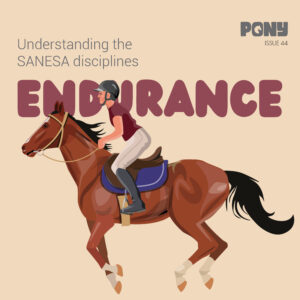
Imagine riding your horse for 40, 60, or even 120 kilometres through the countryside – that’s Endurance riding!
What IS Endurance?
Endurance is a competition against the clock where the speed and endurance of a horse is put to the test. Riders are challenged to use effective pacing and show thorough knowledge of their horses and their ability to perform cross-country. But here’s the important part: although riders are timed, the emphasis is on finishing in good condition rather than coming first!
Endurance is a genuine test of horsemanship that began as a necessity rather than a sport. For centuries, horseback riding was the main form of transportation, and reliable horses that could travel long distances while remaining healthy and fit were highly valued. When necessity was replaced by other means of transportation, endurance riding thrived as a sport!
Think of it like a marathon for horses – except you need to know when to speed up, when to slow down, how your horse is feeling, and make sure they stay healthy throughout the whole journey. It’s part race, part strategy game, and part horse care challenge all rolled into one!
How does Endurance work?
Before the ride even starts, your horse is inspected by a vet to make sure they’re fit and healthy. You might be given a map or GPS waypoints showing the route, where the compulsory stops are (called ‘holds’), and any obstacles like steep hills, water crossings, or ditches you’ll encounter. The trails are usually marked with coloured ribbons so you know where to go.
The ride is divided into sections (called ‘loops’). After each section, you stop for vet check. This is super important! The vet checks:
- Is your horse sound (not lame)?
- Are they dehydrated?
- What’s their heart rate and breathing rate?
- Are they fit to continue?
Here’s the tricky part: your time keeps running until your horse’s heart rate drops below the required level! So it’s really important that your horse recovers quickly. If a horse is deemed unfit to continue (because they’re lame or too tired), they’re eliminated from the competition. This protects horses from being pushed too hard.
After passing the vet check, there’s a compulsory hold time (usually 40-60 minutes) where you feed and water your horse, let them rest, and get ready for the next section.
The terrain varies hugely from ride to ride – you might cross rivers, climb hills, ride through forests, or canter across open fields. Natural obstacles (called ‘hazards’) are marked on the trail. You’re free to choose your pace, which means you need to be smart about when to go fast and when to slow down!
Why are Arabian horses popular in Endurance?
Any breed can compete in Endurance, but Arabian horses generally dominate the top levels. Why? They were bred in the Arabian desert to travel long distances with limited water, which gave them natural stamina and endurance abilities. But don’t worry – you don’t need an Arabian! Many other breeds do brilliantly in Endurance, especially at the lower levels.
How does SANESA Endurance work?
SANESA Endurance is a bit different from other SANESA disciplines. Instead of special SANESA-only shows, you ride in regular ERASA (Endurance Ride Association of South Africa) competitions throughout the year. Here’s how it works:
- The season: Runs from after one Fauresmith ride until the next Fauresmith (roughly August to August).
- No special qualifiers: You just ride normal ERASA competitions and then submit those rides to SANESA.
- How to enter: SANESA uploads entry forms (schedules) to their website. When they’re open, SANESA emails you to submit your rides.
- Points and teams: SANESA gets your ride information from ERASA and uses a computer programme to award points and determine provincial teams.
Important: Both you AND your horse must be registered members of ERASA to compete. You’ll need to familiarise yourself with ERASA rules and regulations too!
SANESA Endurance levels
SANESA offers four levels of endurance riding, each with different distance requirements. Both Primary School and High School riders compete in the same levels:
Level 0 – Newcomers’ Challenge
- Distance: TWO rides of 40km each
- Speed limit: 16km/h maximum per loop
- Perfect for: Beginners! If you and your horse are new to Endurance, this is where you start.
Level 1 – 60km/80km Stepladder Ride
- Distance: THREE rides of at least 60km each (80km rides also count)
- Speed limit: 16km/h average speed as per ERASA rules
- Special rule: Time stops at the vet check at the end of the second loop, NOT when you cross the finish line.
- Perfect for: Riders who’ve done Level 0 and are ready for longer distances.
Level 4 – 80km Competitive Ride
- Distance: THREE rides of 80km each (100km rides also count)
- No speed limit: You’re racing against the clock now!
- Note: ERASA Stepladder rides don’t count for Level 4. The famous Fauresmith ride counts as a qualifier, but the speed won’t be adjusted.
- Perfect for: Experienced riders with fit horses ready for serious competition.
Level 7 – 120km Competitive Ride
- Distance: TWO rides of 120km each (160km rides also count!).
- This is serious: 120km is an incredibly long ride!
- Note: If you want to compete in BOTH Level 4 and Level 7, the Fauresmith ride will only count toward Level 7.
- Perfect for: Top-level riders with super-fit horses, ready for the ultimate challenge.
Important safety rules
SANESA takes safety very seriously:
- ALL child riders MUST ride with an experienced senior (someone who has completed more than 240km of competition). This is not optional!
- It’s recommended that all novice junior riders ride with an experienced senior, even if you’re older.
- Your horse needs a recognised passport with updated vaccinations done by a vet.
- At Nationals, only you can warm up your horse (starting from 6pm the night before until the end of the ride).
What do you wear and use?
Great news! Endurance has a much more relaxed dress code than dressage or showing! Comfort and practicality are key for such long rides:
Clothing:
- Jodhpurs: ANY colour is allowed! Wear what’s comfortable.
- Footwear: You can wear running shoes (‘tekkies’) with chaps if you use safety stirrups! Or wear proper riding boots.
- Helmet: Still mandatory! Always wear your approved helmet with a three-point harness.
- Numbers: You must wear your identification number, and your horse must be numbered as per ERASA rules
Tack:
- Colourful tack is allowed! Endurance riders often use bright, fun colours.
- PVC endurance bridles are permitted – these are lightweight and practical for long rides.
- Otherwise, tack must comply with ERASA rules.
- Your horse should be clean and neatly turned out.
How are you scored?
Endurance scoring is based on your speed, but it’s calculated differently for each level:
Level 0 & Level 1:
- Riders are placed according to their actual speed.
- Remember the 16km/h speed limit!
- You still earn points even if you’re not first.
Level 4 & Level 7:
- Riders are placed according to ‘corrected speed’ (which includes a handicap as per ERASA rules).
- The rider with the best corrected speed gets 300 points, second place gets 297 points, etc.
Important: You earn both individual points (for yourself) and school points (for your school team). Even if you don’t finish, you can still earn participation points!
What makes a good Endurance rider?
- Horse knowledge: You need to know your horse inside and out – their breathing, heart rate, normal behaviour, and signs of tiredness.
- Pace judgment: Knowing when to speed up and when to slow down is crucial.
- Fitness: Both you AND your horse need to be fit! Start training gradually.
- Navigation skills: You need to be able to follow a map or GPS and spot trail markers.
- Horse care: Knowing how to help your horse recover quickly at vet checks.
- Strategy: Understanding the terrain and planning your ride accordingly.
- Patience: It’s better to slow down and finish healthy than to race and get eliminated.
Top tips for SANESA Endurance
- Start small: Begin at Level 0 even if you think you could do more. It’s important to learn the ropes safely.
- Build fitness gradually: Don’t try to go from 0 to 80km overnight! Both you and your horse need time to build up stamina.
- Practice at home: Do long training rides to build fitness and learn your horse’s rhythms.
- Learn recovery techniques: Ask experienced riders how to help your horse’s heart rate come down quickly.
- Hydration is key: Make sure both you and your horse drink plenty of water.
- Study the route: Look at the map before the ride and plan where you might speed up or slow down.
- Listen to your horse: If they’re telling you they’re tired, slow down! It’s better to finish slowly than not finish at all.
- Ride with experienced people: Learn from riders who’ve done endurance for years.
- Join ERASA: Make sure both you and your horse are registered members and read their rules.
- Submit your rides: Remember to enter your ERASA rides into SANESA when the entry schedules open!
Why try Endurance?
Endurance is perfect for riders who:
- Love long rides and exploring the countryside.
- Want a real challenge that tests both riding and horsemanship skills.
- Enjoy strategy and making tactical decisions.
- Like the idea of competing against the clock.
- Have a horse or pony with natural stamina.
- Want to develop an incredibly close partnership with their horse.
- Are interested in fitness, both their own and their horse’s.
- Like the more relaxed dress code compared to other disciplines!
Endurance teaches you more about horses than almost any other discipline. You learn to read your horse, understand their fitness, recognise when they’re tired, and know how to help them recover. The bond you develop with an endurance horse is incredibly special; you’re a team working together over long distances and challenging terrain.
Ready to start your Endurance adventure?
If endurance sounds exciting, start by:
- Build fitness: Start doing longer rides at home with your horse.
- Register with ERASA: Visit www.erasa.co.za to register both yourself and your horse.
- Find an experienced rider: Remember, children MUST ride with an experienced senior (someone with more than 240km of competition).
- Enter your first Level 0 ride: Look for a 40km ride on the ERASA calendar.
- Submit to SANESA: After your ride, submit it to SANESA when their entry schedules open.
Remember: in Endurance, to finish is to win. The goal isn’t just to be fastest; it’s to complete the ride with your horse healthy, happy, and sound. That’s the true mark of a successful endurance partnership!
So, are you ready to hit the trails and discover just how far you and your horse can go together? Your endurance journey awaits!
For more information about SANESA Endurance and to register with ERASA, visit www.sanesa.co.za and www.erasa.co.za

